

Artificial grass does useful work for years. Then somebody has to take apart something that was built to stay together. Could it be designed differently from the very first fibre?
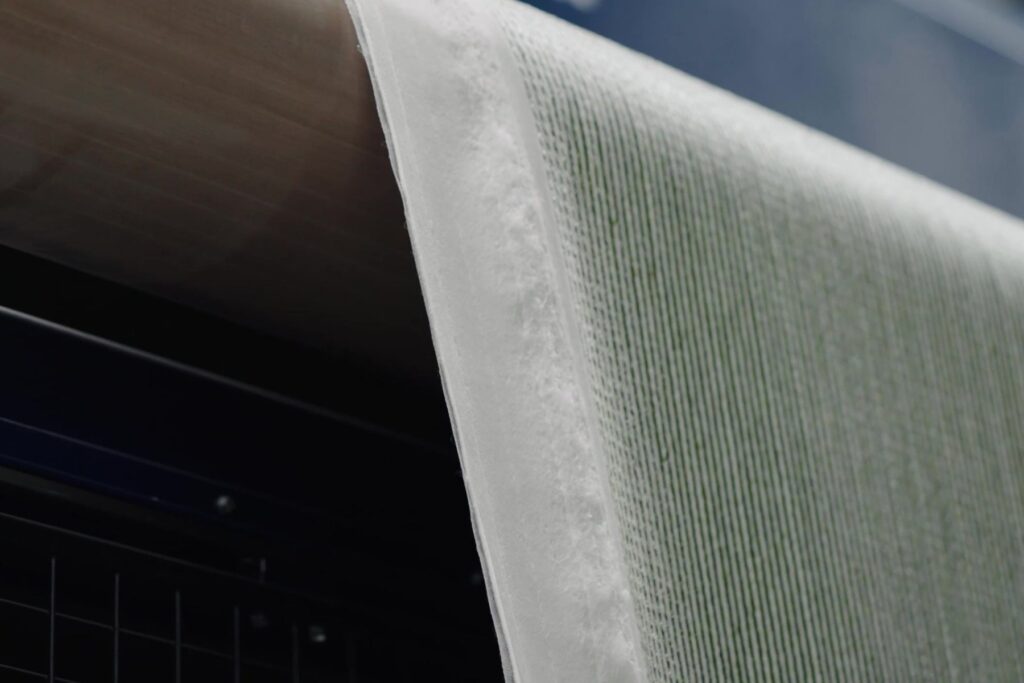
ONE-DNA™ backing on the production line.
Where it started
Built to stay together. Hard to take apart.
A conventional construction can combine a polyethylene yarn, a polypropylene backing and a latex or polyurethane coating that bonds them. It works for years. The problem was never the function. It was the construction.
01
The question
Can the construction be simpler?
If every layer is a different material, every layer has to be separated again at the end. So we started with the construction itself.
02
The first answer
One polymer, fibre through to backing.
The first ONE-DNA™ construction used polyethylene throughout, joined with FuseTech™ heat bonding instead of a conventional coating. Early adopters in Europe, Australia and the United States took it from idea to installed surface.
03
What the field taught us
One answer is not enough.
A garden, a sports pitch and a play area are different engineering problems. So the idea became a platform: three material routes, each chosen for what the application has to do.
Development and production
An idea needs a factory.
ONE-DNA™ was developed in collaboration with TenCate Grass, combining a different approach to material design with decades of experience in artificial grass technology.
Today TenCate Grass supports the continued development, engineering and production of ONE-DNA™. Manufacturing takes place at its production facility in Cortegaça, Portugal.
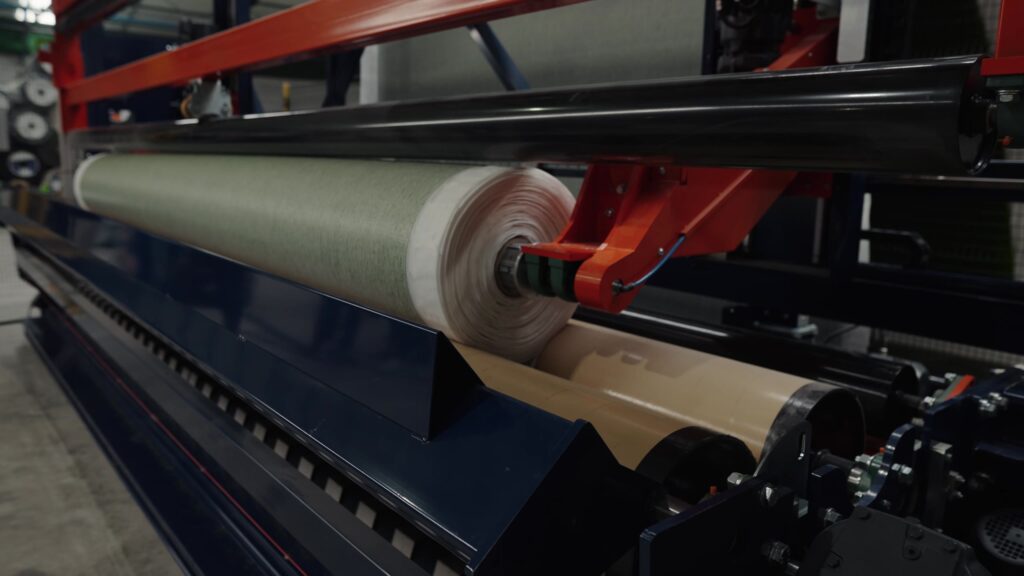
A roll of ONE-DNA™ artificial grass in production.
The people
Four people. One ambition.
Making better material design a practical choice for the industry. From product development and material choices to partnerships and market adoption.

Jasper Eppingbroek
Managing Director
Dennis Knipmeijer
Business Development

Cas Kaptein
Head of Sustainability

Ed Donkers
Marketing Director, TenCate Grass
Around them: the independent companies that supply and install ONE-DNA™, and the engineers and production teams at TenCate Grass.
What stays the same
Five principles behind every product.
The material route can differ per application. These five principles apply to every product.
Performance for the application
Every surface has to deliver what its application requires.
Material design
One material route per product, 100% PE, 100% PP or 100% PO, with fibre and backing joined by heat.
Measured impact
Life cycle assessment is a standard part of how products are developed and evaluated.
Continuous improvement
What the data shows is used to reduce impact, while keeping the performance the application needs.
Designed for recycling
The next material life is considered from the start. Whether a product is recycled depends on what happens after use.
Ready to see it for real?
ONE-DNA™ is supplied and installed by independent companies. They can show you samples and quote for your project.
FAQ
Questions about us
ONE-DNA™ was developed in collaboration with TenCate Grass. TenCate Grass supports its continued development, engineering and production, at its facility in Cortegaça, Portugal.
A technology platform. It covers three material routes (100% PE, 100% PP and 100% PO) and the FuseTech™ heat-bonding construction. Products are built on it, each in a stated route.
Because a garden, a sports pitch and a play area ask different things of a surface. The application decides the route, and evidence is stated for the route each product is made in.
It is designed for recycling: a simpler construction leaves less to separate. Whether a surface is actually recycled depends on removal, collection, sorting and the processing available where it ends up. More on end of life →
Installers, landscapers and distributors can supply ONE-DNA™ as part of the ONE-DNA™ supplier network. Become a supplier →
Something else? Talk to us →