You can recognise a good playground by its sound. Children running, climbing, calling out and trying again. What you cannot hear or see is what all that play rests on: the surface. That is where choices are made that stay in play for years.

Room to discover
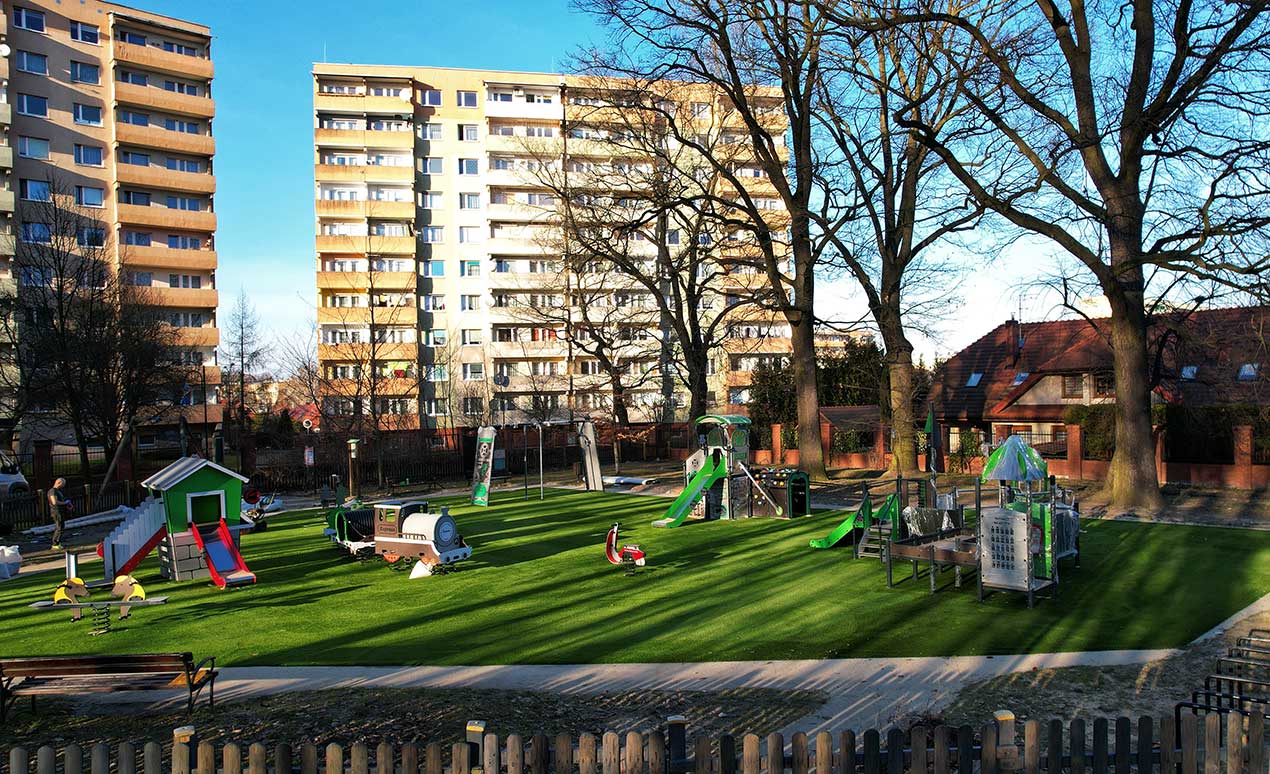
Play is how children get to know the world. They test their balance, judge distances, fall over and get back up. The best playgrounds make room for that: a grassy mound to roll down, a swing you want to push just a little higher, a school playground where the whole class can play at once.
Whoever designs, manages or builds such a place chooses equipment, zones and fall heights with care. But the foundation of every playground lies under the children’s feet.
What lies beneath the surface
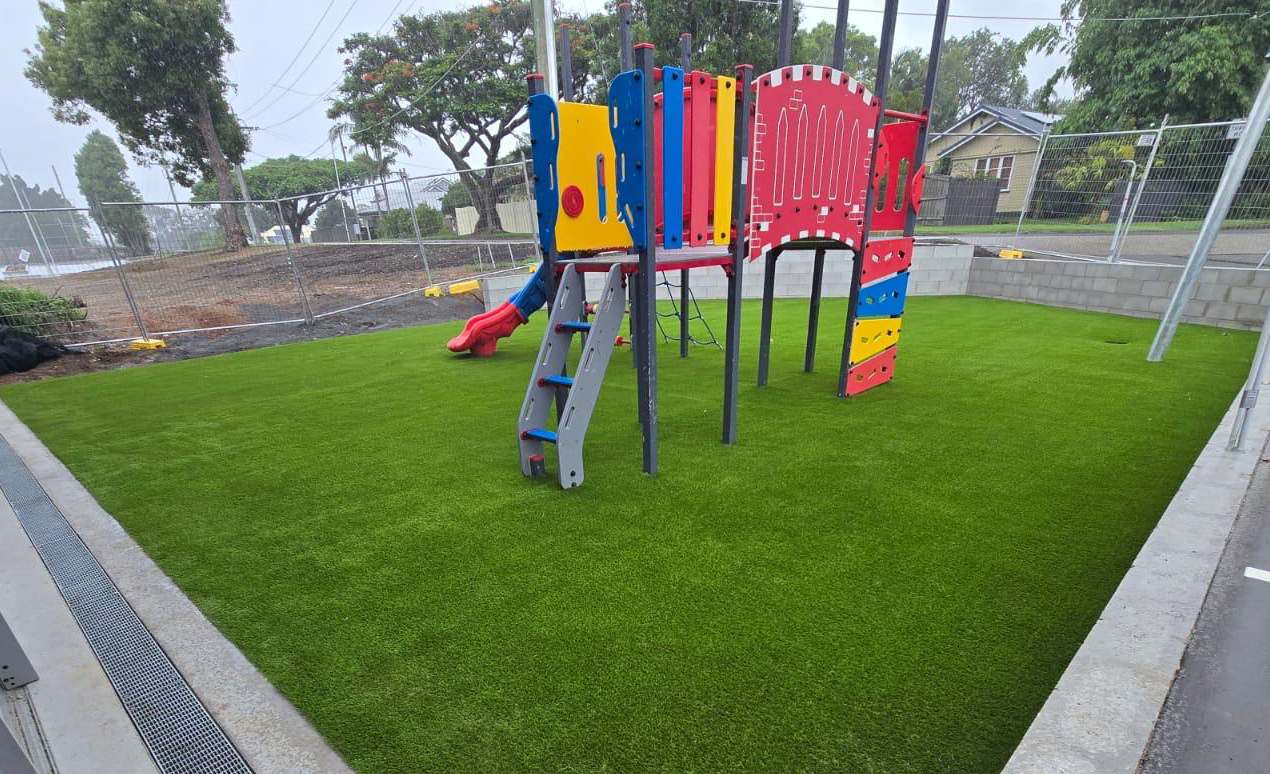
A surface shapes how a playground feels, how rainwater drains away and how the space looks after years of intensive use. Under play equipment, together with the layer beneath it, it determines how a fall is absorbed.
So a good choice goes beyond colour and appearance. What materials is the surface made of? How is it built up? And has that been independently tested? These are questions every client is entitled to ask, and every supplier should be able to answer.
A reminder from Spain
In October 2026, rubber playground surfaces drew wide media attention in Spain. Much of the coverage referred to research by the Spanish research institute IDAEA-CSIC (2023), which analysed the composition of recycled tyre crumb and EPDM rubber. The study looked at which substances the material contains, not whether they are released or what that means for health. The lesson the researchers drew themselves reaches beyond one material: anyone choosing a surface should be able to know what it is made of.
The ONE-DNA™ approach
That is exactly where ONE-DNA™ starts. We design artificial grass around one question: how few materials does it need? The result is a clear, deliberate construction.
- Carefully chosen materials. Every layer has a job, and we keep the number of material types as small as possible.
- No latex or PU coating. Our turf is made without a latex or polyurethane coating on the backing.
- Independently tested. During product development, independent laboratories examine our materials, including migration of elements, PAHs, substances of very high concern and leaching.
- Designed for recycling. A simple composition removes one of the main barriers to reuse. Whether material is actually recycled after use depends on local collection and processing.
What we test, we show. That way a designer or buyer can judge for themselves what a result means and which product it applies to.
ONE-DNA™ Play 24: made for play

ONE-DNA™ Play 24 is our artificial grass for playgrounds, school grounds and public play spaces. With a 24 mm pile, it gives a play area a green, well-kept character and is suitable as the surface for professionally designed play environments.
Play 24 is made without a latex or PU coating and is developed to form a complete play surface together with sand infill and a suitable shockpad.
From product to playground
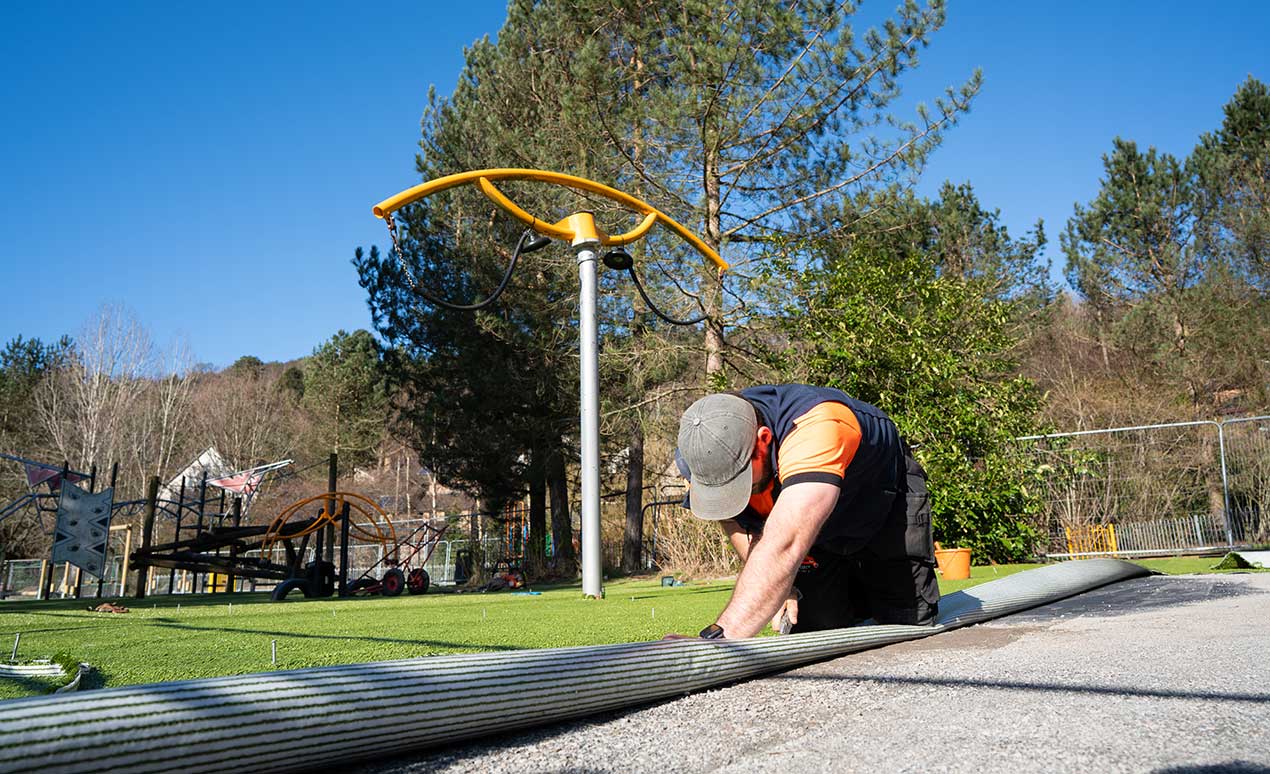
A safe playground is always the result of the complete system. Under equipment with a fall height, the combination of turf, sand and shockpad absorbs the impact of a fall. BS EN 1177 tests that build-up as a whole and links the result to the critical fall height of the equipment. A level, free-draining base, skilled installation and regular maintenance and inspection complete the picture. That is why we work with professional partners who install the build-up as specified.
Room to play freely
The best playgrounds feel effortless to children. They run, climb, fall and get back up without a second thought. For the professionals who make such places possible, that ease starts with a surface whose make-up and construction are known. That is what ONE-DNA™ is here to contribute.
Explore ONE-DNA™ for playgrounds, view ONE-DNA™ Play 24 or request product documentation for your project through For professionals.
Supported by independent testing
In 2022, the laboratory SGS tested earlier constructions of our play turf: an all-PE version and a version with PE fibres on a PP backing.
- Migration of 19 elements (EN 71-3, the European toy-safety standard): all values below the detection limit.
- PAHs (polycyclic aromatic hydrocarbons): below 0.2 mg/kg.
- Substances of very high concern on the REACH Candidate List (as of 2022): none detected above 0.1%.
- Leaching of 19 metals and salts (NEN 7375, 64 days): only molybdenum and sulphate found, far below the limits.
These results apply to the constructions tested and are not a certification of the current Play 24. Reports: SGS A133330/R20220658, A135310/R20220679a and A136230/BU20221594a. Impact attenuation to EN 1177 is tested per build-up; see the product page.