The Dutch State Secretary for Infrastructure and Water Management has adopted the Circular Materials Plan (CMP), which will replace LAP3 (Landelijk Afvalbeheerplan 3) on 30 December 2025. The new framework reflects a broader shift in how materials are considered throughout their lifecycle, placing greater emphasis on material composition, documentation and traceability.
For professionals involved in landscaping, sport and recreational projects, the CMP signals an increasing focus on understanding what products are made of, how materials are documented and what pathways may be available after use.
Why this matters
Artificial grass has traditionally been assessed based on performance, appearance and cost. While these factors remain important, the CMP highlights the growing relevance of material information and lifecycle considerations.
For municipalities, specifiers, contractors and facility managers, this means that questions about material composition, product documentation and traceability are likely to become increasingly important during procurement and project planning.
The conversation is gradually expanding beyond surface performance alone. Material choices made during design are becoming a larger part of the decision-making process.
Material transparency becomes more important
One of the key themes within the broader transition towards circular materials management is transparency. Understanding how products are constructed and how materials are identified helps create a clearer picture of what options may exist throughout the product lifecycle.
For artificial grass systems, this places greater emphasis on:
- Transparent material composition
- Product documentation
- Material traceability
- Independent verification
- Environmental product information
As a result, material design is becoming an increasingly relevant consideration alongside performance, safety and cost.
What this means for the artificial grass sector
The adoption of the CMP provides greater clarity for organisations involved in artificial grass projects.
Municipalities and specifiers are expected to place increasing importance on documentation and material information. Contractors and installers may encounter growing demand for systems that are easy to identify and document. Manufacturers are being encouraged to consider material composition earlier in the design process.
Across the sector, there is a growing recognition that material choices made during product development influence what remains possible later.
How ONE-DNA™ aligns with this direction
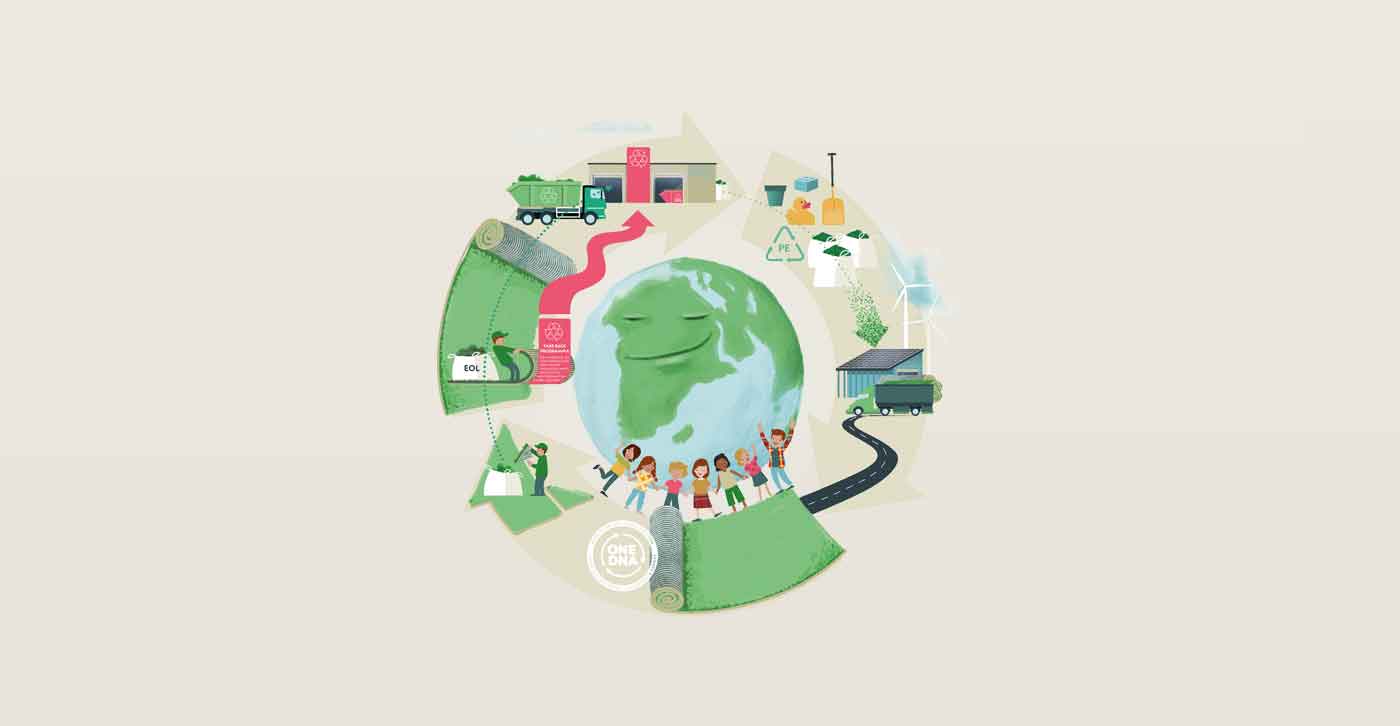
The principles behind ONE-DNA™ are closely connected to many of the themes currently gaining attention within the industry. ONE-DNA™ is built around a mono-material polyethylene design and is supported by product documentation, independent testing and environmental data. Every installation can be linked to project registration.
The focus is not only on product performance, but also on material transparency, traceability and material value retention throughout the product lifecycle.
Looking ahead
The adoption of the CMP marks an important moment for the Dutch materials landscape. While the practical implications will continue to develop over time, the direction is becoming increasingly clear: material composition, documentation and traceability are gaining importance across many product categories, including artificial grass.
For organisations involved in specifying, installing or managing artificial grass systems, understanding materials is becoming just as important as understanding performance.
The future of artificial grass will not be defined by appearance alone, but increasingly by the choices made at the design stage.
Updated October 2026: references to a take-back programme have been revised. ONE-DNA™ does not currently operate a take-back programme in any market.
Update, October 2026: this article reflects the ONE-DNA™ range at the time of publication, based on polyethylene (PE). ONE-DNA™ now also includes a 100% PO route; see Technology for the current material routes.
Related: Sustainability · For professionals