Across industries, from packaging and textiles to construction products and consumer goods, one principle is becoming increasingly important: design products with recycling in mind from the start.
A key part of that approach is mono-material design.
Products made from multiple materials often perform well during use, but can become difficult to recycle at the end of their lifecycle. Different materials frequently require separation, specialized processing and additional energy, making high-value recycling more complex and expensive.
Mono-material products take a different approach.
Designed for Recycling
When a product is made from a single material, recycling can become significantly simpler.
There is no need to separate different polymers or material layers before processing. This can reduce complexity and processing costs, and can help preserve the quality of the recycled material.
The result is a more efficient route from end-of-life product back to valuable raw material.
Higher Material Value Retention
One of the biggest challenges in recycling mixed-material products is the loss of material quality.
When different materials are combined during recycling, the resulting recyclate often has fewer applications and a lower market value.
Mono-material systems can help preserve material purity, creating greater opportunities for high-value reuse rather than downcycling.
Simplicity Throughout the Lifecycle
Mono-material design does not only simplify recycling.
It can also reduce complexity during production, logistics and material management. Fewer material types mean simpler supply chains, greater transparency and a clearer understanding of how products can be processed at end of life.
These principles are increasingly reflected in circular economy policies and product design frameworks across Europe.
The ONE-DNA™ Approach
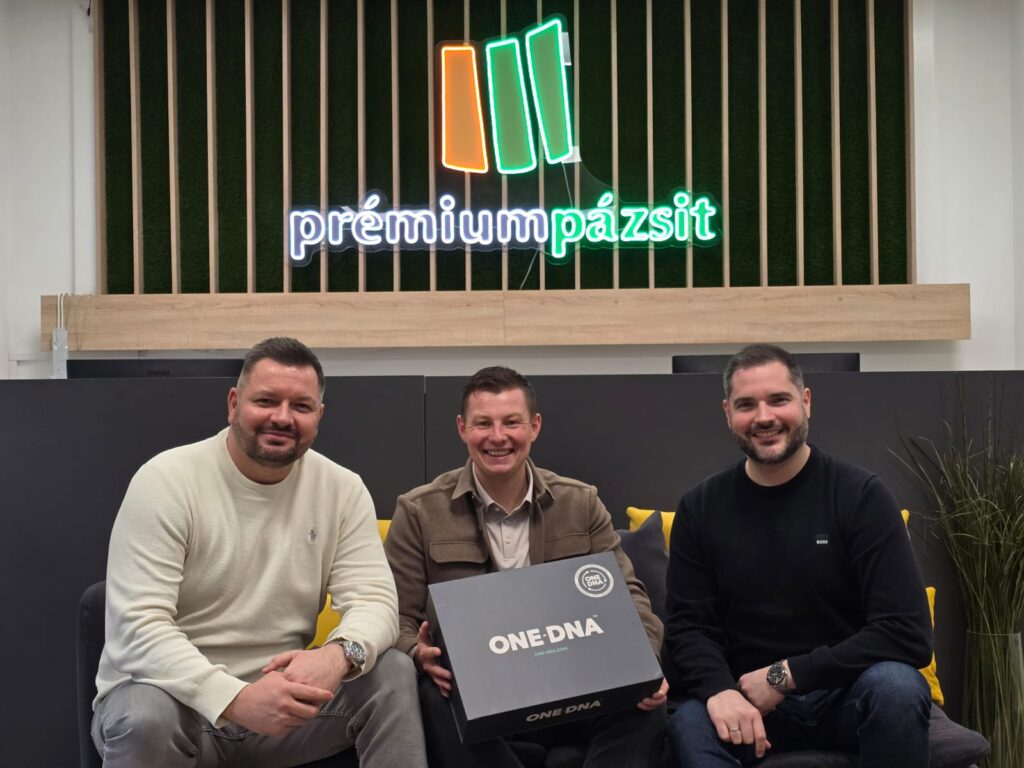
ONE-DNA™ artificial grass applied these principles through a 100% PE (one polymer) design.
By using a single polymer throughout the product structure, the system is designed to simplify future recycling and support high-value material recovery.
The concept follows a straightforward idea: the easiest product to recycle is the one that was designed for recycling from the beginning.
Looking Ahead
As industries continue to move towards circular design principles, mono-material solutions are becoming increasingly relevant.
The objective is not simply to recycle more products, but to design products in a way that makes high-quality recycling possible.
Mono-material design is one of the clearest examples of how decisions made during product development can influence sustainability outcomes throughout an entire product lifecycle.
Update, October 2026: this article reflects the ONE-DNA™ range at the time of publication, based on polyethylene (PE). ONE-DNA™ now also includes a 100% PO route; see Technology for the current material routes.
Related: Technology · Sustainability