Terms such as recycling, downcycling and circular design are increasingly used in discussions about product development and material use. Although these concepts are related, they describe different approaches to how materials move through a product lifecycle.
Understanding the differences can help designers, manufacturers, architects and project owners make more informed decisions about materials and product design.
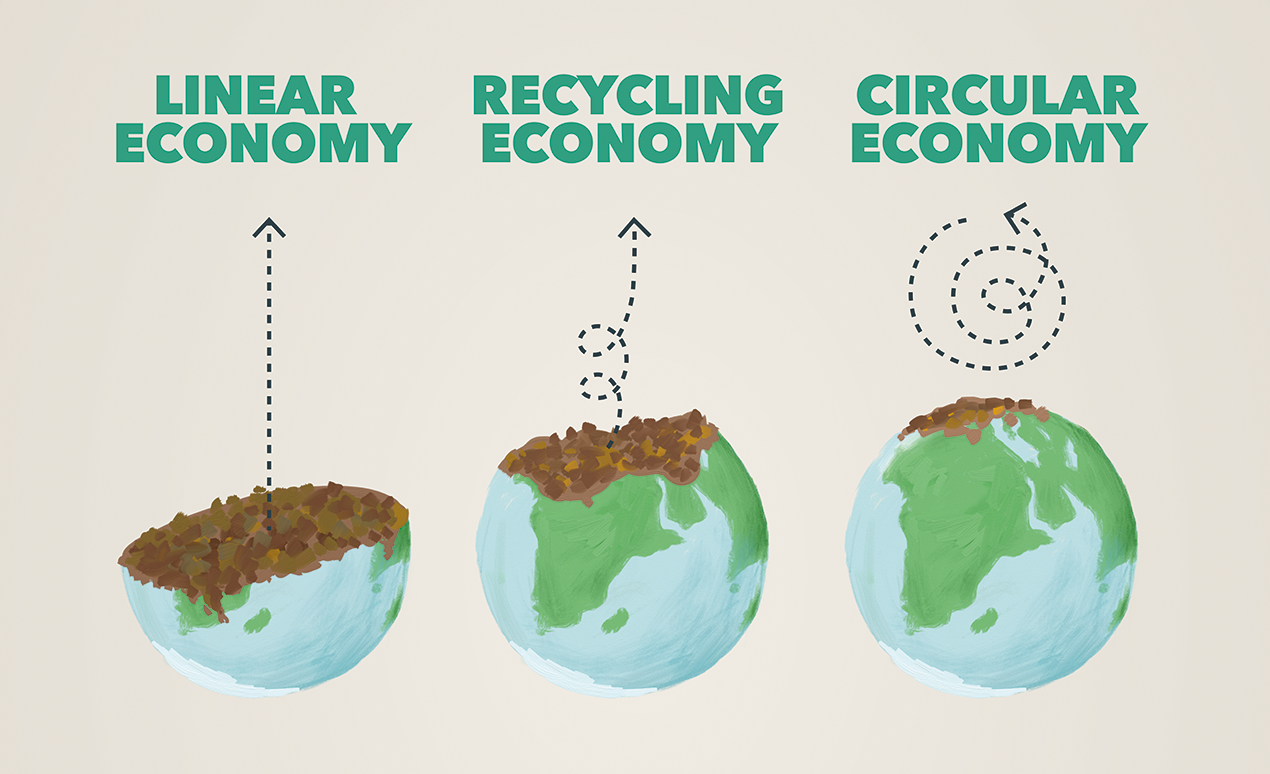
Linear product flows
Many products follow a traditional linear model.
In a linear system, raw materials are extracted, transformed into products, used and eventually discarded. Once the product reaches the end of its service life, the material leaves the system and a new cycle begins with new raw materials.
This approach has formed the basis of industrial production for decades.
What is recycling?
Recycling refers to the process of collecting and processing materials after use so they can be used again in the manufacture of new products.
The process typically involves:
- Collection
- Sorting
- Processing
- Reintroduction into manufacturing
Recycling helps extend the useful life of materials and can reduce dependence on virgin raw materials.
However, the outcome often depends on factors such as material composition, contamination levels and available processing technologies.
What is downcycling?
Downcycling is a specific form of recycling.
In downcycling, recovered materials are used in applications that require lower performance characteristics than the original product.
For example, a material originally designed for a high-performance application may later be used in products where technical requirements are less demanding.
The material remains in use, but its potential applications may become more limited over time.
What is circular design?
Circular design focuses on how products are developed from the outset.
Rather than concentrating solely on what happens after use, circular design considers questions such as:
- What materials are used?
- How complex is the product structure?
- Can materials be identified and documented?
- What options remain available after use?
The goal is to consider future material pathways during product development rather than only at the end of the product lifecycle.
Why material composition matters
Material composition plays an important role in determining what options may be available after use.
Products made from a single material family generally have a simpler material structure than products composed of multiple materials. This can make material identification, documentation and processing more straightforward.
As a result, many industries are increasingly paying attention to material transparency and product design decisions made at the beginning of the development process.
The relevance for artificial grass
Artificial grass provides a practical example of how design choices influence material complexity.
Many conventional systems combine multiple materials within a single product structure. ONE-DNA™ followed a 100% PE (one polymer) design, supported by transparent material composition and documented product information.
This approach reflects broader Design for Recycling principles, where material simplicity and transparency are considered during product development.
Looking ahead
The discussion around recycling, downcycling and circular design is ultimately a discussion about product design.
The choices made at the start of a product’s development influence what options remain available throughout its lifecycle. Understanding these relationships helps create better-informed conversations about materials, product documentation and future material pathways.
Update, October 2026: this article reflects the ONE-DNA™ range at the time of publication, based on polyethylene (PE). ONE-DNA™ now also includes a 100% PO route; see Technology for the current material routes.
Related: Sustainability · Technology