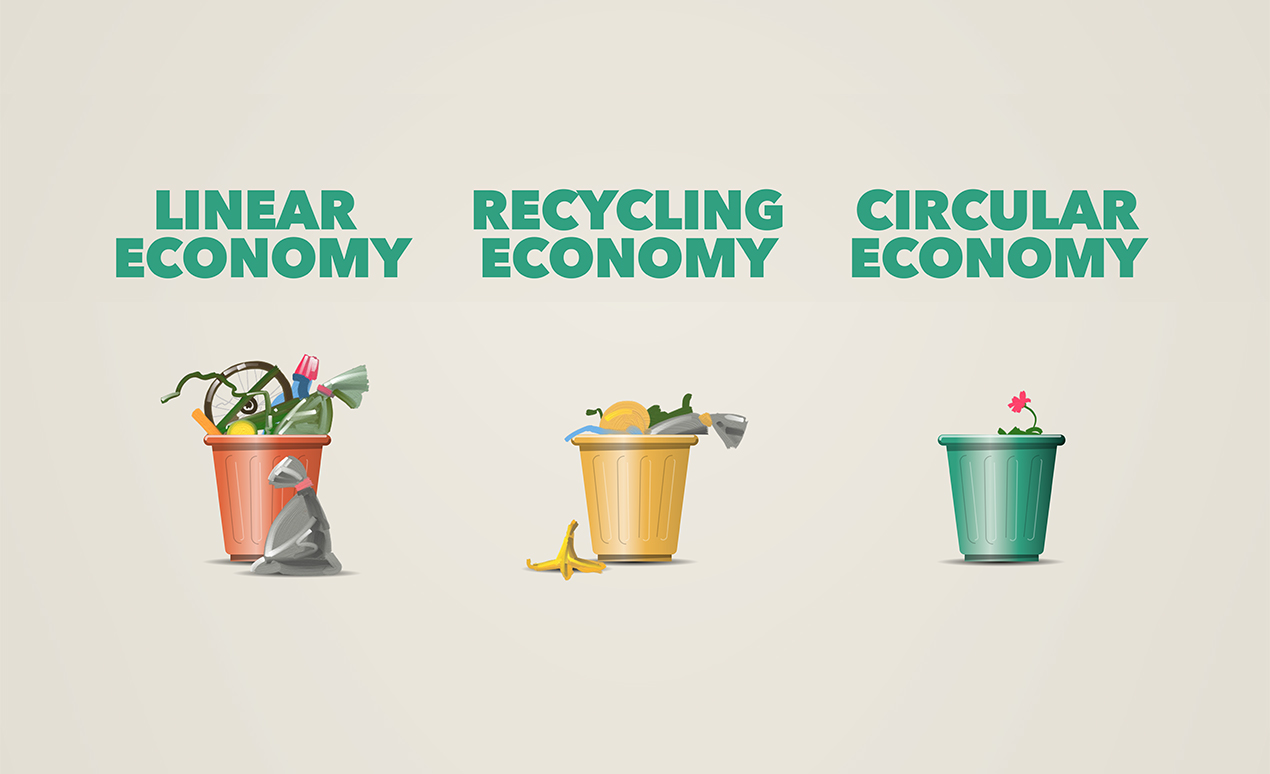
The Dutch Circular Materials Plan (CMP) represents an important development in how materials are managed throughout their lifecycle.
Developed by the Dutch Ministry of Infrastructure and Water Management, the CMP provides policy guidance for resource use, material recovery and recycling. The plan forms part of the broader Dutch ambition to reduce dependence on primary raw materials and increase the efficient use of materials across multiple sectors.
For the artificial turf industry, the CMP provides useful insight into how future material management may evolve.
A shift towards material stewardship
The CMP places increasing emphasis on understanding how products are designed, used and processed after their service life.
Rather than focusing solely on waste management, the plan encourages stakeholders to consider material composition, product design and future processing options from the outset.
This reflects a broader shift towards lifecycle thinking.
Key themes within the CMP
Several themes are particularly relevant to the artificial turf sector.
- Resource efficiency: The CMP encourages more efficient use of materials and seeks to reduce dependence on primary raw materials where possible.
- Material transparency: Understanding what products are made from is becoming increasingly important for procurement, recycling and material management.
- Recycling quality: The plan highlights the importance of preserving material quality wherever possible and encourages approaches that support effective material recovery.
- Collaboration throughout the value chain: Manufacturers, recyclers, project owners and policymakers all play a role in improving material management outcomes.
What does this mean for artificial turf?
Artificial turf systems can vary significantly in terms of material composition.
Some products contain multiple polymers and material types, while others are based on a more uniform material structure.
As attention increases around material transparency and future processing options, product composition is likely to become a more important consideration during specification and procurement processes.
The CMP does not prescribe specific product solutions. Instead, it provides a framework that encourages stakeholders to consider how design choices may influence future material pathways.
The relevance of mono-material design
One concept receiving increasing attention across multiple industries is mono-material design.
Products developed around a single material family can offer greater transparency regarding composition and may simplify certain aspects of material identification and processing compared to more complex material structures.
ONE-DNA™ applied this design philosophy through a 100% PE (one polymer) approach.
Looking ahead
The CMP provides direction rather than prescription.
For the artificial turf industry, the plan reinforces the growing importance of:
- Material transparency
- Product documentation
- Design for Recycling
- Lifecycle thinking
- Collaboration across the value chain
As regulations, procurement criteria and market expectations continue to evolve, understanding material composition is likely to become an increasingly important part of product evaluation and decision-making.
Update, October 2026: this article reflects the ONE-DNA™ range at the time of publication, based on polyethylene (PE). ONE-DNA™ now also includes a 100% PO route; see Technology for the current material routes.
Related: Sustainability · For professionals