

Every ONE-DNA™ product starts with what the surface has to do. Testing shows what works. Life cycle data shows where it can improve. And every result stays tied to the product and build-up that was tested.
Research and development
Test it. Measure it. Then change it.
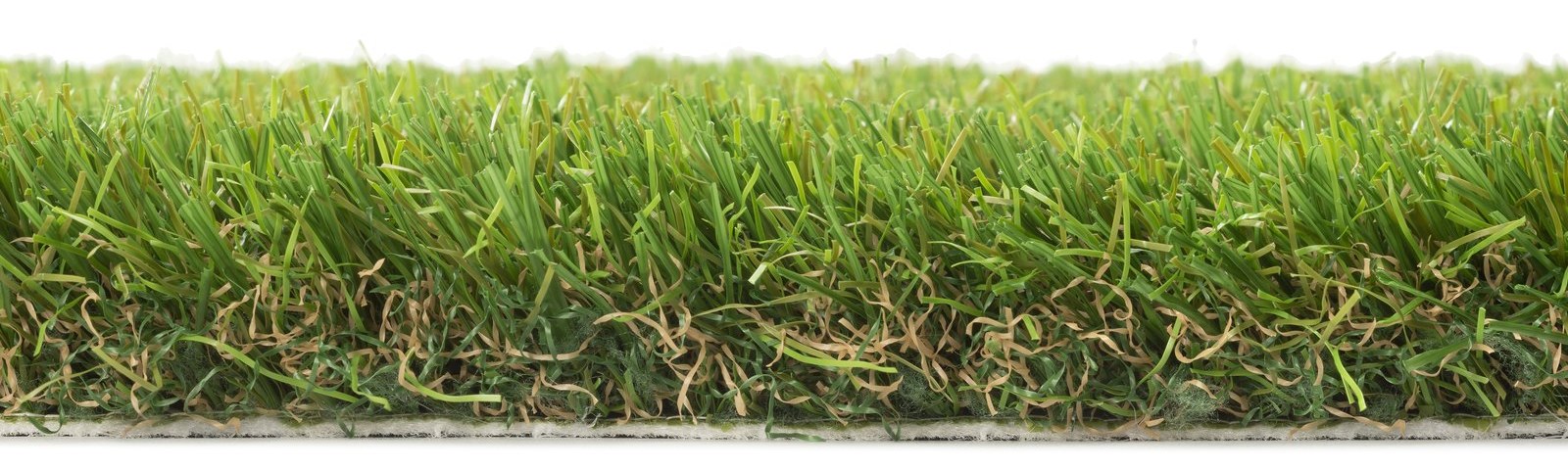
ONE-DNA™ Elan 35, side profile. Pile, thatch and backing are each a design decision.
How a product is made
A product is three decisions, not one.
Development follows the same sequence every time: the application first, then material and construction, then prototypes, tests and refinement.
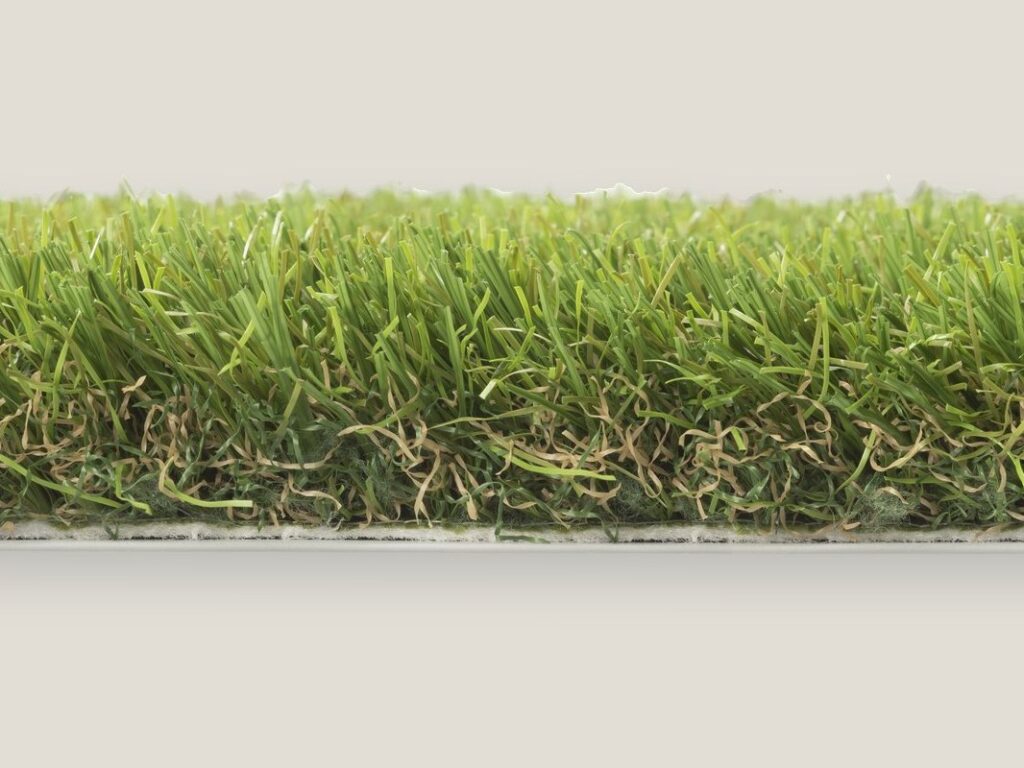
ONE-DNA™ artificial grass, side profile.
01
Material architecture
Which materials the product is built from. The application decides the route: one polymer (100% PE or 100% PP) or PE and PP combined (100% PO).
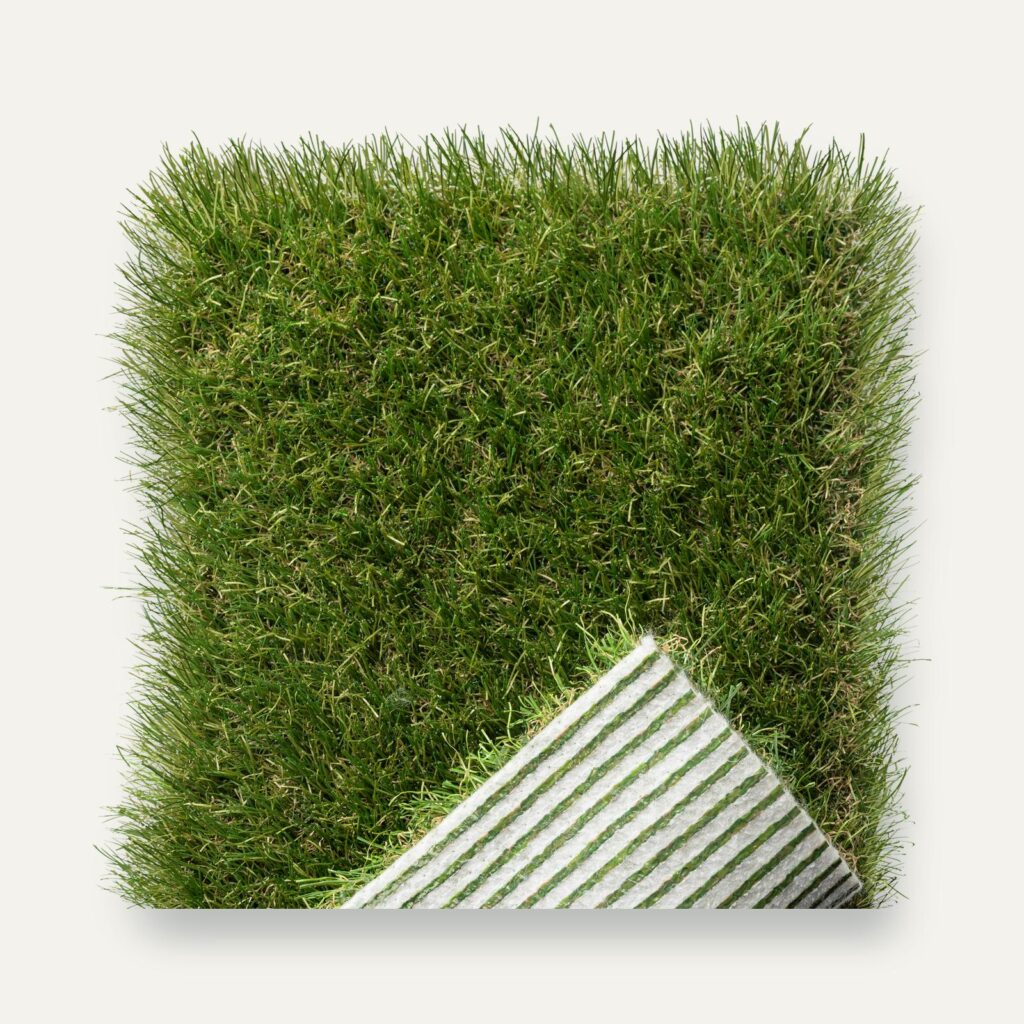
A ONE-DNA™ sample, turned over to show the backing.
02
Construction
How those materials are joined. FuseTech™ bonds the fibres with heat, without a conventional latex or polyurethane coating.
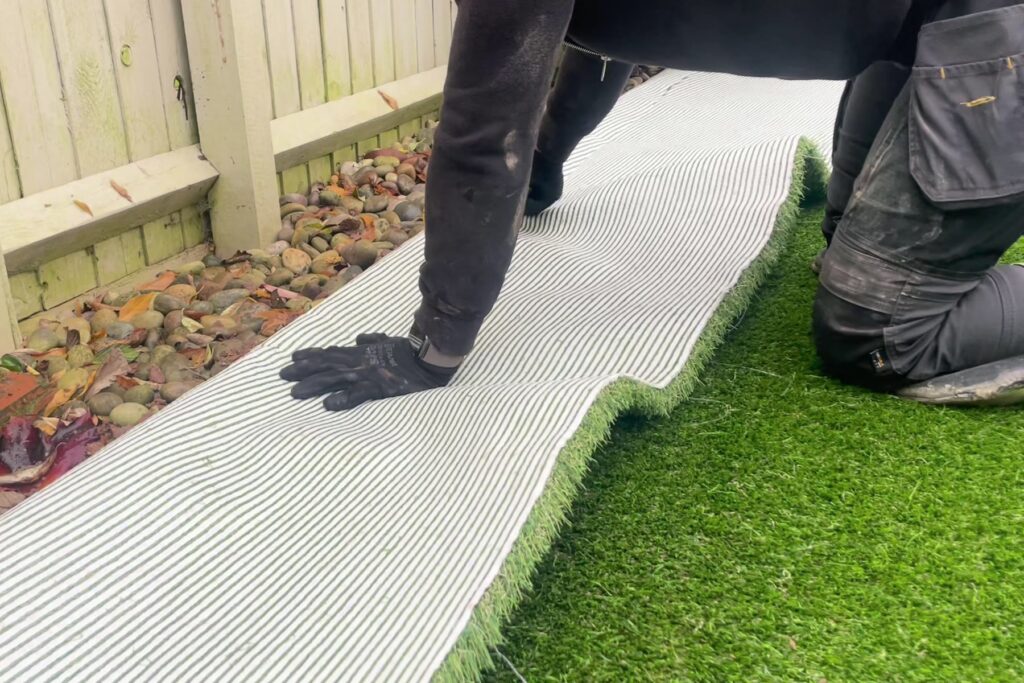
Installation in a UK garden.
03
System
How it performs once installed. Artificial grass, infill, shockpad and base work together, so performance is tested as a system.
Six questions
Tested separately. Reported with their scope.
Each test answers a different question. Every result belongs to the product, the material route and the configuration named in the report.
Reaction to fire
Classified for a specific product and configuration. Infill and build-up can change the class.
Impact attenuation
Critical fall height is set for the complete build-up: artificial grass, infill and shockpad together.
Water permeability
Measured on the product under defined conditions. Drainage on site also depends on the base.
Materials and substances
Tested against the requirements named in each report, such as EN 71-3.
Accelerated ageing
Controlled UV, heat and water exposure, to see how specified properties change.
Sports systems
Performance tested on defined system configurations. Results apply to that build-up.
Measure. Learn. Improve.
A life cycle assessment is a design tool.
Modelled across raw materials, production, transport, installation, use and end of life, it shows where a product’s impact sits, and what to change next.
1
Engineer
Build the construction around what the application needs, with its next material life in mind.
2
Measure
Assess environmental impact across the life cycle stages included in the study.
3
Identify
Find where the impact sits and which design decisions drive it.
4
Change
Adjust what the data supports: material route, quantity or process. Then measure again.
Salil Sethunath, Group Innovation Director, TenCate Grass. Interview in English with English subtitles.
From lab to line
From material research to industrial production.
A different construction needs more than a material concept. It needs engineering, testing and production that repeats, roll after roll.
Working with TenCate Grass connects ONE-DNA™ product development with industrial production, so ideas from the lab can be made at scale.
Innovation starts with the material. Progress starts with people. Salil Sethunath, Group Innovation Director at TenCate Grass, on commissioning production lines set up for ONE-DNA™ products, and why he sees this as a beginning rather than an end point.
FAQ
Questions about testing
No. A result applies to the product, material route and build-up named in the report. Ask for the report for the product you plan to use.
Independent test laboratories. For example, ISP GmbH tested ONE-DNA™ Play 24 and Vista to EN 1177, and SGS tested selected products for chemical substances (SVHC, PAH, EN 71-3). Each report names the laboratory, the method and the configuration tested. Ask us for the reports for your product and we will send the versions that apply.
Because performance on site depends on more than the artificial grass. Infill, shockpad and base change how a surface behaves, so system results are tied to the tested build-up.
Not yet for current production. EPDs based on the life cycle assessment for production in Portugal are in their final stage and are published once independently verified. Environmental data →
We share what helps you specify: materials, routes, test results and environmental data. Process settings stay with the production team.
Need a specific report? Request technical documentation →